Your hobby show
deserves to pay
for itself.
Seven structured modules take you from recording in a closet with borrowed gear to landing your first sponsor with a cold pitch that actually works. No paid ads. No viral luck required.

How the course works
Build your foundation
The first two modules are about decisions that compound. You choose a niche using a repeatable research method, not instinct. Then you assemble a recording setup that sounds clean on any budget. These choices determine everything downstream, so we spend real time on them.
Build your system
Modules three through five are operational. You get an editing workflow designed around real life constraints, a publishing checklist that takes consistency from intention to habit, and an organic growth playbook that works without an advertising budget. Repeatable systems beat sporadic effort every time.
Build your revenue
The final two modules cover the business side. You construct a professional media kit using the built-in builder, then work through a cold pitch template designed for small but engaged audiences. Module seven closes with the mindset shift that separates hobbyists from hosts who treat their show as a side project worth sustaining.
Seven modules.
One complete transformation.
Each module is self-contained and actionable. You can move at your own pace, but the sequence is deliberate. Earlier modules create leverage for later ones.
Niche Validation
Finding the intersection of your genuine interest and an underserved audience. Research methods, competitor mapping, and the signals that tell you a niche has listeners without being saturated.
Recording Setup Under $200
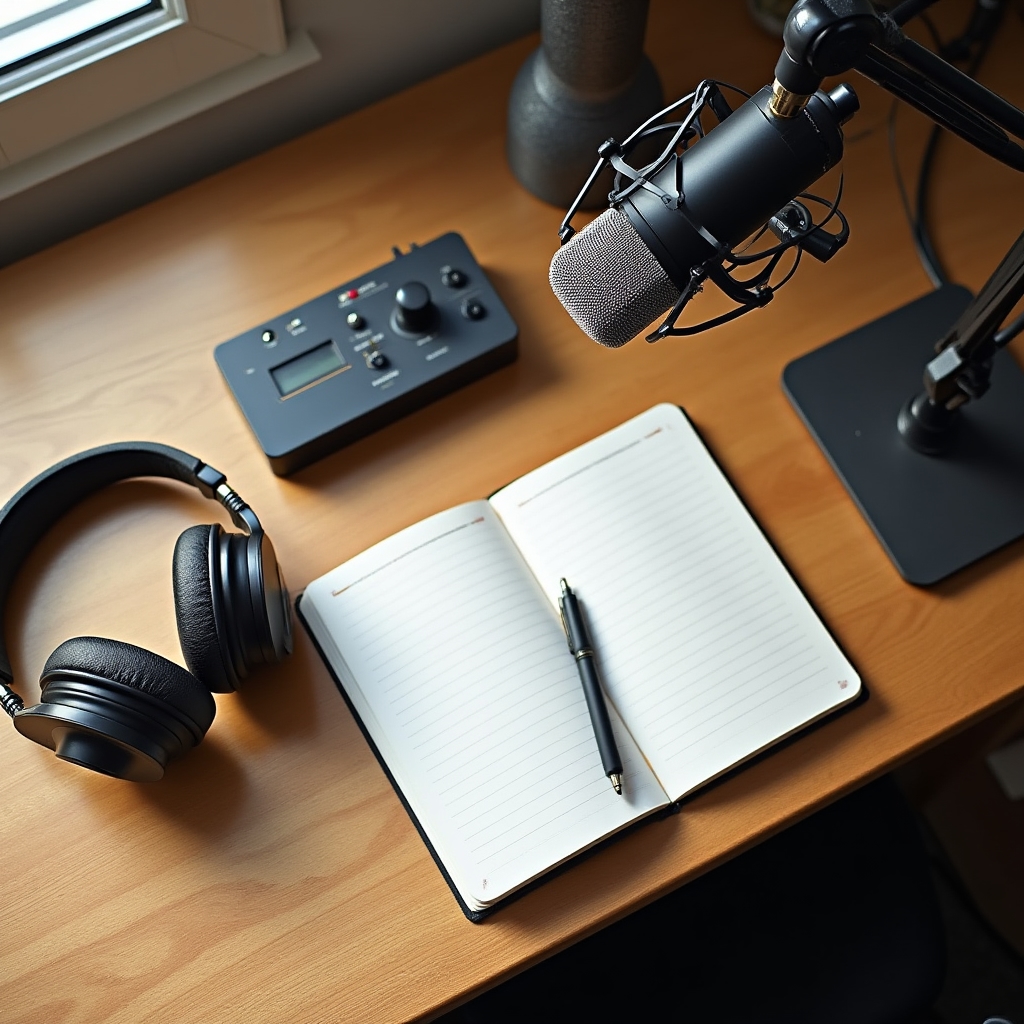
A curated gear path for every budget tier within that ceiling. Acoustic treatment with household materials. The settings and techniques that matter more than the equipment itself.
The 30-Minute Edit
A workflow designed for time-constrained creators. Which edits matter to listeners and which ones only matter to you. Tools, templates, and the honest truth about production value versus content quality.
Publishing Without Friction
Show notes that actually serve listeners. Metadata that improves discoverability. A publishing checklist that makes consistency feel mechanical rather than motivational.
Organic Audience Growth
Cross-promotion, guest exchange, community seeding, and search optimization for podcast platforms. Growth strategies that work on a zero-dollar budget and compound over time.
Media Kit Builder
A structured tool for creating a professional one-page media kit. Audience demographics, download data framing, show positioning, and the visual presentation that makes small shows look credible to sponsors.
Your First Sponsor Pitch
A cold pitch template built around what smaller shows can genuinely offer: engaged listeners, niche authority, and authentic integration. How to find the right sponsors, what to say, and how to follow up without being annoying.
Built for real life, not ideal conditions.
Most podcast advice assumes you have unlimited time, a spare room, and an existing audience. This course was built for the opposite situation.
Niche research that reduces guesswork
A structured process for identifying topics where listener demand exists but content supply is thin. You work through it once and know where to plant your flag.
A gear path with a hard ceiling
The budget constraint is a feature, not a limitation. Knowing the ceiling forces better decisions. You leave with a specific list, not vague suggestions.
Editing that respects your time
Thirty minutes is not a rough estimate. It is the design constraint the workflow was built around. You learn which cuts matter and which ones you are making for yourself.
Growth without an ad spend
Paid promotion is not covered because it is not the lever most independent hosts should pull first. Organic methods, done consistently, build sturdier audiences.
A pitch template that works for small shows
The cold pitch approach here was designed for hosts who do not yet have large numbers. It focuses on what engaged niche audiences can genuinely offer sponsors.
A media kit you can build in one session
The built-in builder walks you through every section. You end up with a document that looks professional regardless of your design background.

Your media kit is your handshake.
Sponsors receive a lot of pitches. Most of them are emails with listener counts and a link to the show. A well-structured media kit changes the conversation. It demonstrates that you understand your audience, that you take the business side seriously, and that working with you will not require hand-holding.
The builder inside Module 6 is a structured template with guidance at every step. Audience demographics, platform performance, show positioning, rate card, and contact information. You fill in the fields, and the output is a document you can send with confidence.
See how the builder works
Ready to take your show seriously?
Seven modules. One media kit builder. A cold pitch template that works for small audiences. Start when you are ready.